Best Self-Service Kiosk Systems for Restaurants in Hyderabad
The restaurant industry in Hyderabad is experiencing a remarkable transformation. From traditional biryani houses to modern quick-service restaurants, dining establishments across the city are embracing innovative technology to enhance customer experiences and streamline operations. Among the most impactful innovations making waves in the food service sector is the self-service kiosk system – a technology that’s revolutionizing how customers order food and how restaurants manage their operations. As Hyderabad continues to grow as a major metropolitan hub with a thriving food culture, restaurant owners are increasingly recognizing the value of implementing self-service kiosks. These interactive touchscreen terminals are no longer exclusive to international fast-food chains; they’re becoming essential tools for restaurants of all sizes, from neighborhood cafes to large food courts across the city. Discover the best self-service kiosk systems for restaurants in Hyderabad. Increase revenue by 30%, reduce wait times by 40%, and improve order accuracy. Learn about features, ROI, and implementation with ZenKiosk – the leading restaurant kiosk solution in India.
Understanding Self-Service Kiosk Systems
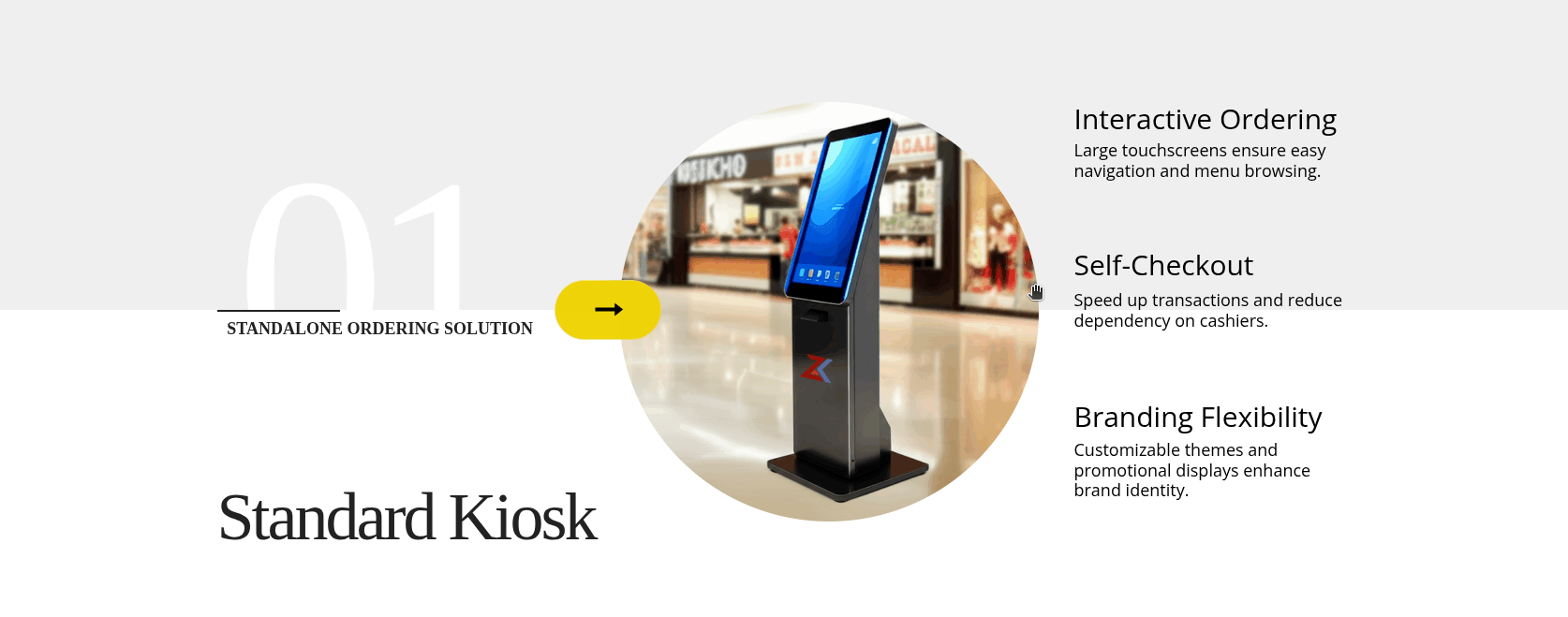
A self-service kiosk is an interactive, standalone digital device that allows customers to browse menus, customize their orders, make selections, and complete payments – all without direct staff intervention. These sophisticated systems typically feature intuitive touchscreen interfaces, integrated payment terminals supporting multiple payment methods including UPI, cards, and digital wallets, and direct connectivity to kitchen display systems for seamless order transmission.
The technology represents a fundamental shift in the dining experience, placing control directly in the hands of customers while simultaneously optimizing restaurant workflows. For Hyderabad’s diverse restaurant landscape, where efficiency and customer satisfaction are paramount, these systems offer compelling advantages.
Why Hyderabad Restaurants are Adopting Kiosk Technology
The adoption of self-service kiosks in Hyderabad’s restaurant sector is driven by multiple converging factors. The city’s tech-savvy population, particularly millennials and Gen Z consumers, increasingly expects digital-first experiences. These younger demographics, which represent a significant portion of the dining market, are comfortable with technology and often prefer self-service options that give them control and convenience.
Labor challenges also play a crucial role. Like many cities across India, Hyderabad restaurants face ongoing difficulties in recruiting and retaining skilled service staff. Self-service kiosks help address staffing gaps by handling routine order-taking tasks, allowing existing employees to focus on food preparation, customer engagement, and other value-added activities. This shift enables restaurants to operate more efficiently even with leaner staff numbers.
The competitive landscape further accelerates adoption. As some restaurants implement kiosks and demonstrate faster service and enhanced customer experiences, others feel compelled to follow suit to remain competitive. The technology has evolved from a novelty to an expectation, particularly in quick-service and fast-casual segments.
Key Benefits of Self-Service Kiosks for Hyderabad Restaurants
Enhanced Revenue Generation
One of the most compelling advantages of self-service kiosks is their proven ability to increase average order values. Research shows that automated upselling through kiosks can lead to significant increases in average order value—often up to 20% higher per transaction. Unlike human cashiers who may hesitate to suggest add-ons or forget during busy periods, kiosks consistently present complementary items, upgrades, and promotional offers at optimal moments during the ordering process.
The psychology behind this increase is straightforward. Customers browsing at their own pace, without perceived pressure from staff or other waiting customers, are more willing to explore menu options and consider additional items. Visual presentations of food items, complete with high-quality images and descriptions, make add-ons more appealing. Studies indicate that self-ordering kiosks can generate orders up to 30% higher in value than orders placed in person.
Improved Operational Efficiency
Efficiency gains represent another major benefit. Self-service kiosks can significantly reduce wait times, especially during peak hours. During lunch rushes or dinner crowds, traditional ordering methods often create bottlenecks at registers or with waitstaff. Kiosks enable multiple customers to place orders simultaneously, eliminating queues and accelerating the entire ordering flow.
Analysts estimate that self-service kiosks reduce order time by almost 40%. This dramatic improvement means restaurants can serve more customers per hour, increasing daily revenue potential without proportional increases in operational costs. The faster throughput is particularly valuable for restaurants in high-traffic locations like shopping malls, food courts, and commercial areas across Hyderabad.
Superior Order Accuracy
Miscommunication between customers and staff is a common source of errors in traditional ordering systems. Language barriers, noise levels, and human mistakes can result in incorrect orders, leading to customer dissatisfaction, food waste, and lost revenue. Self-service kiosks eliminate these issues by allowing customers to input their exact preferences directly into the system.
Direct input accuracy minimizes the risk of miscommunication or errors, and this reduction in mistakes not only boosts customer satisfaction but also prevents waste. When customers see their complete order displayed on screen before confirming, they can catch and correct any errors themselves. The result is a higher rate of order accuracy, fewer remakes, reduced food waste, and happier customers.
Labor Cost Optimization
While kiosks don’t replace staff entirely, they fundamentally change labor dynamics. Over time, labor cost reductions significantly boost profitability by optimizing workforce management and allowing restaurants to operate more efficiently. Staff members previously tied to order-taking can be redirected to customer service, food preparation, dining area management, and other tasks that create more value for guests.
For Hyderabad restaurants struggling with labor shortages or high turnover, kiosks provide operational continuity. The technology doesn’t call in sick, request time off, or require training on menu changes – it’s consistently available and performs its function reliably.
Enhanced Customer Experience
Modern consumers value autonomy and control over their ordering experience. Studies show that customers increasingly value the autonomy and control these kiosks provide, especially for customizing orders, adding on more items, and exploring menu options at their own pace. Kiosks empower diners to take their time, review nutritional information, explore customization options, and make informed decisions without feeling rushed.
For customers with specific dietary requirements or preferences, kiosks provide a pressure-free environment to build their perfect meal. The interface can display allergen information, nutritional data, and customization options clearly, helping customers make choices that align with their needs and preferences.
Valuable Data Collection
Self-service kiosks generate rich data that helps restaurant owners make smarter business decisions. These systems track popular items, peak ordering times, common customizations, average order values, and customer preferences. This information enables restaurants to optimize menu layouts, adjust pricing strategies, plan inventory more effectively, and design targeted promotions.
Understanding which items are frequently ordered together helps with combo creation and bundling strategies. Identifying slow-moving items allows for menu refinement or promotional focus. Real-time data visibility empowers managers to make informed decisions quickly, adapting to trends and opportunities as they emerge.
Types of Restaurants in Hyderabad Benefiting from Kiosks
Quick Service Restaurants (QSRs)
Fast-food establishments and quick-service chains represent the largest adopters of kiosk technology in Hyderabad. These restaurants prioritize speed, efficiency, and consistency – all areas where kiosks excel. Major international and national chains operating in the city have successfully integrated kiosks into their service models, demonstrating strong return on investment.
Fast-Casual Dining
The fast-casual segment, which bridges quick service and full-service dining, finds kiosks particularly valuable. These establishments often offer customizable menu items and premium ingredients, and kiosks provide an ideal platform for showcasing customization options and guiding customers through the building process.
Food Courts and Mall Outlets
Hyderabad’s numerous shopping malls and food courts experience high customer volumes and diverse traffic patterns. In these high-footfall environments, kiosks help manage crowds efficiently, reduce perceived wait times, and maintain service quality even during peak shopping hours. The technology is particularly effective in food court settings where customers appreciate the ability to browse multiple concepts and make decisions at their own pace.
Cafes and Coffee Shops
Coffee shops and cafes catering to students, professionals, and co-working crowds are increasingly adopting kiosks for beverage and snack orders. These establishments benefit from the technology’s ability to handle complex customization options for coffee drinks and the contactless ordering experience that appeals to their tech-savvy customer base.
Multi-Location Restaurant Groups
Restaurant groups operating multiple locations across Hyderabad find kiosks particularly valuable for maintaining consistency across outlets. Centralized menu management, unified pricing, and standardized ordering experiences help ensure brand consistency regardless of location or staff variability.
Essential Features to Look for in Restaurant Kiosk Systems
When evaluating self-service kiosk solutions for a Hyderabad restaurant, several critical features warrant consideration.
Intuitive User Interface
The interface should be clean, visually appealing, and easy to navigate for users of all technical abilities. Large buttons, clear categories, high-quality food images, and logical menu organization contribute to a positive user experience. The system should guide customers smoothly through menu browsing, customization, and checkout with minimal friction.
Multi-Language Support
Hyderabad’s diverse population speaks multiple languages including Telugu, Hindi, English, and others. Kiosk systems should offer multi-language interfaces allowing customers to select their preferred language, ensuring accessibility for all demographic segments.
Integrated Payment Options
Support for diverse payment methods is essential. The kiosk should seamlessly accept credit and debit cards, UPI payments, digital wallets, contactless payments, and potentially cash through integrated bill acceptors. The checkout process should be secure, quick, and compliant with payment industry standards.
Menu Customization Capabilities
The system must accommodate complex customization options that are common in modern dining. Customers should be able to easily add or remove ingredients, select cooking preferences, specify spice levels, and make other modifications relevant to the menu. The interface should make these options clear and accessible without overwhelming users.
Kitchen Integration
Direct integration with kitchen display systems ensures that orders flow seamlessly from the kiosk to food preparation areas. This connectivity eliminates the need for manual order entry, reduces errors, and speeds up the overall service flow. Orders should appear in the kitchen immediately upon customer confirmation.
Reporting and Analytics
Comprehensive reporting capabilities help restaurant managers understand performance metrics, identify trends, and make data-driven decisions. The system should provide insights into sales patterns, popular items, peak hours, average order values, and other key performance indicators.
Hardware Reliability
The physical hardware must be robust enough to withstand constant use in demanding restaurant environments. Touchscreens should be responsive and durable, the enclosure should be easy to clean and maintain, and components should have proven reliability records. Consider screen sizes appropriate for your space and customer flow, typically ranging from 21 to 43 inches.
Brand Customization
The kiosk interface should be fully customizable to reflect your restaurant’s brand identity. Logo placement, color schemes, font choices, and overall aesthetic should align with your existing branding to create a cohesive customer experience.
Support and Maintenance
Reliable technical support is crucial. Look for vendors offering responsive customer service, regular software updates, remote troubleshooting capabilities, and clear maintenance agreements. Downtime can significantly impact operations, so having dependable support is essential.
Implementation Considerations for Hyderabad Restaurants
Space Planning
Kiosk placement requires thoughtful consideration. Position units in high-visibility areas where customers can easily discover them, ensure adequate space for queues without blocking traffic flow, and consider whether floor-standing or counter top models better suit your layout. Many successful implementations use a combination of traditional registers and kiosks during the transition period.
Staff Training and Change Management
While kiosks reduce certain labor requirements, successful implementation requires staff buy-in and training. Employees should understand how the system works, be able to assist customers who need help, know how to troubleshoot basic issues, and recognize how kiosks free them to provide enhanced customer service in other ways. Address concerns about job security by emphasizing how technology creates opportunities for more engaging roles.
Customer Education
Not all customers will immediately embrace self-service technology. Create clear signage directing customers to kiosks, have staff available to guide first-time users, consider offering incentives for kiosk usage initially, and be patient during the transition period. Most restaurants find that adoption increases steadily as customers experience the benefits.
Integration with Existing Systems
Ensure the kiosk solution integrates smoothly with your current point-of-sale system, kitchen display systems, inventory management software, accounting systems, and loyalty programs. Seamless integration prevents data silos and enables comprehensive operational visibility.
Regulatory Compliance
Ensure your kiosk system complies with relevant regulations including payment card industry data security standards, local tax requirements, food safety information display requirements, and accessibility guidelines.
Return on Investment: What Hyderabad Restaurants Can Expect
The financial case for self-service kiosks is compelling when evaluated comprehensively. Initial investment costs typically range from ₹50,000 to ₹2,00,000 per unit depending on screen size, hardware quality, software features, and customization requirements.
Self-service kiosks pay for themselves in a relatively short time. Most restaurants report recouping their investment within 3 to 12 months through a combination of increased revenue from higher average order values, labor cost savings, improved operational efficiency, reduced order errors and waste, and enhanced customer throughput during peak periods.
Beyond direct financial returns, kiosks provide less tangible but equally valuable benefits including enhanced brand perception, improved customer satisfaction scores, competitive differentiation, operational consistency across locations, and valuable data for strategic decision-making.
The Future of Restaurant Kiosks in Hyderabad
The trajectory for self-service kiosk adoption in Hyderabad restaurants points decidedly upward. As technology continues evolving, we can anticipate several emerging trends shaping the future landscape.
Artificial intelligence integration will enable more sophisticated personalization, with kiosks recognizing returning customers, remembering preferences, and making intelligent recommendations based on purchase history and current trends. Voice ordering capabilities may supplement touchscreen interfaces, providing additional accessibility and convenience.
Integration with loyalty programs will deepen, creating seamless experiences where customers automatically earn and redeem rewards through kiosk transactions. Enhanced visual capabilities including augmented reality features could allow customers to visualize dishes before ordering, further enhancing the decision-making process.
The convergence of kiosk ordering with mobile apps and table-side ordering will create omnichannel experiences where customers start orders on one platform and complete them on another. This flexibility will cater to diverse customer preferences and use cases.
Choosing the Right Kiosk Partner for Your Hyderabad Restaurant
Selecting a kiosk solution provider requires careful evaluation. Consider vendors with proven experience in the restaurant industry, strong local presence in Hyderabad or India for reliable support, positive customer references and case studies, transparent pricing without hidden fees, scalable solutions that grow with your business, regular software updates and feature enhancements, and commitment to long-term partnership rather than transactional relationships.
Request demonstrations of the system in action, ask detailed questions about integration capabilities, understand the full scope of ongoing costs including software licensing, maintenance, and support, and evaluate the vendor’s financial stability and market presence.
Conclusion: Embracing the Digital Future
The adoption of self-service kiosk systems represents more than a technological upgrade – it signifies a fundamental evolution in how Hyderabad restaurants interact with customers and manage operations. In a competitive market where customer expectations continue rising and operational margins remain tight, kiosks provide a powerful tool for differentiation and efficiency.
The benefits are clear and measurable: increased revenue through higher order values, improved operational efficiency and reduced wait times, superior order accuracy and reduced waste, optimized labor allocation and cost management, enhanced customer experience and satisfaction, and valuable data enabling smarter business decisions.
For restaurant owners and operators in Hyderabad, the question is no longer whether to implement self-service kiosks but rather when and how. Early adopters are already realizing competitive advantages, while those delaying implementation risk falling behind as technology becomes standard rather than exceptional.
As Hyderabad’s food service industry continues its rapid evolution, self-service kiosks will play an increasingly central role in delivering the fast, accurate, and personalized experiences that modern diners demand. Restaurants that embrace this technology thoughtfully, with attention to customer experience and operational integration, position themselves for sustained success in the digital age.
Introducing ZenKiosk: Self-Service Kiosk Systems for Restaurants
For restaurants in Hyderabad seeking a comprehensive, reliable, and innovative self-service kiosk system, ZenKiosk offers a purpose-built solution designed specifically for the unique needs of the Indian food service industry.
ZenKiosk combines powerful technology with intuitive design to create seamless ordering experiences that customers love and operations that restaurant owners can depend on. The platform features a beautiful, customizable interface that reflects your brand identity while guiding customers effortlessly through the ordering process. Multi-language support including English, Hindi, Telugu, and other regional languages ensures accessibility for Hyderabad’s diverse dining population.
The system’s intelligent upselling engine automatically suggests complementary items, upgrades, and promotions at optimal moments in the ordering flow, driving higher average order values without any additional effort from your team. Comprehensive payment integration supports all major payment methods including UPI, credit and debit cards, digital wallets, and contactless payments, providing flexibility and convenience for every customer.
ZenKiosk’s direct integration with kitchen display systems ensures that orders flow instantly from customer confirmation to food preparation, eliminating delays and errors. The platform’s robust analytics dashboard provides real-time insights into sales performance, popular items, peak periods, and customer behavior, empowering data-driven decision-making.
Built on reliable hardware designed for demanding restaurant environments, ZenKiosk systems feature responsive touchscreens, durable construction, and easy maintenance. The solution is fully scalable, serving single-location independent restaurants as effectively as multi-unit chains requiring centralized management across numerous outlets.
What truly sets ZenKiosk apart is the commitment to partnership. With local support teams in India, comprehensive training programs, regular software updates with new features, and responsive customer service, ZenKiosk ensures your investment delivers sustained value. The transparent pricing model eliminates surprises, while flexible deployment options accommodate various budgets and operational scales.
For Hyderabad restaurants ready to embrace the future of dining technology, ZenKiosk provides the perfect combination of innovation, reliability, and support. Transform your customer experience, optimize your operations, and position your restaurant for long-term success with a self-service solution built for the way you do business.
Whether you operate a quick-service concept, fast-casual restaurant, food court outlet, or multi-location chain, ZenKiosk has a solution tailored to your specific needs. Contact the ZenKiosk team today to schedule a demonstration and discover how self-service technology can elevate your restaurant to new heights of efficiency and profitability.