Top Self-Ordering Kiosk Software System Provider
Bangalore, often referred to as the Silicon Valley of India, stands at the forefront of technological innovation in the restaurant and hospitality industry. The city’s vibrant food culture, combined with its tech-savvy population, has created the perfect ecosystem for adopting advanced solutions like self-ordering kiosk systems. As restaurants face mounting challenges including labor shortages, rising operational costs, and increasing customer expectations, self-ordering kiosks have emerged as a transformative solution that addresses multiple pain points simultaneously. You should know about Top Self-Ordering Kiosk Software System Provider in Bangalore
The self-ordering kiosk market in India is experiencing remarkable growth, with Bangalore leading the charge as an early adopter of this technology. From quick-service restaurants to fine-dining establishments, businesses across the spectrum are recognizing the immense value that these digital ordering systems bring to their operations.
Understanding Self-Ordering Kiosk Systems
A self-ordering kiosk is an interactive digital terminal that empowers customers to browse menus, customize orders, and complete payments independently without direct staff interaction. These sophisticated systems combine intuitive touchscreen hardware with powerful software platforms that integrate seamlessly with existing restaurant management systems.
Modern self-ordering kiosks represent far more than simple ordering terminals. They function as comprehensive customer engagement platforms that enhance the dining experience while simultaneously optimizing restaurant operations. The technology has evolved significantly from basic touch-screen interfaces to intelligent systems equipped with artificial intelligence, real-time analytics, and multi-language support.
The Growing Demand for Self-Ordering Kiosks in Bangalore
Bangalore’s restaurant landscape has undergone dramatic transformation in recent years. The city’s population, comprising young professionals, students, and tech enthusiasts, demonstrates a strong preference for digital-first experiences. This demographic shift has accelerated the adoption of self-service technologies across various sectors, particularly in food service establishments.
The post-pandemic world has fundamentally changed customer expectations regarding contactless service options. Health and safety concerns have made touchless or minimal-contact ordering systems not just desirable but essential. Restaurants in Bangalore have responded by rapidly implementing self-ordering kiosks to meet these evolving expectations while maintaining operational efficiency.
The quick-service restaurant sector in India continues to expand at an impressive rate, with market valuations projected to reach significant milestones in coming years. Bangalore, home to numerous international food chains and innovative local establishments, represents a major contributor to this growth trajectory.
Key Benefits of Self-Ordering Kiosk Systems
Enhanced Customer Experience
Self-ordering kiosks fundamentally transform the customer journey by placing control directly in diners’ hands. Customers can browse comprehensive menus at their own pace, viewing high-quality images and detailed descriptions without feeling rushed by waiting lines or busy staff members. This autonomy creates a more relaxed and enjoyable ordering experience.
The technology enables extensive customization options that might be difficult to communicate verbally. Customers can modify ingredients, adjust portion sizes, and explore add-ons with visual confirmation of their selections. This level of personalization significantly increases customer satisfaction and reduces ordering errors caused by miscommunication.
Increased Average Order Value
One of the most compelling benefits of self-ordering kiosks is their proven ability to boost average transaction values. Research consistently demonstrates that orders placed through kiosks are substantially larger than those placed with cashiers. The reasons behind this phenomenon are multifaceted.
Kiosks excel at strategic upselling and cross-selling through intelligent suggestion algorithms. When customers add items to their cart, the system can recommend complementary products, premium upgrades, or combo deals. These suggestions appear at optimal moments in the ordering journey, increasing the likelihood of acceptance. Studies indicate that properly implemented kiosk systems can increase average check sizes by fifteen to thirty percent.
Customers also feel less social pressure when interacting with digital interfaces compared to human cashiers. They can freely explore premium options or add extra items without concerns about judgment or feeling rushed, leading to more exploratory ordering behavior and higher spending.
Reduced Wait Times and Improved Efficiency
Long queues represent one of the most significant pain points in quick-service restaurants. Research shows that customers become increasingly unwilling to wait as line lengths grow, with the vast majority preferring self-service options when confronted with lengthy waits. Self-ordering kiosks effectively address this challenge by enabling simultaneous order processing across multiple terminals.
Implementation of kiosk systems has demonstrated substantial reductions in total ordering time. By allowing customers to complete the entire ordering and payment process independently, restaurants can serve more customers in less time, particularly during peak hours. This efficiency translates to improved customer satisfaction and increased revenue potential.
Labor Cost Optimization
The restaurant industry faces persistent challenges with labor costs and staffing shortages. Self-ordering kiosks provide an effective solution by automating routine order-taking tasks, allowing businesses to operate with leaner front-of-house teams. This doesn’t necessarily mean reducing staff; rather, it enables redeployment of human resources to higher-value activities.
Staff members freed from order-taking responsibilities can focus on food preparation, quality control, customer service enhancement, and maintaining cleanliness standards. This reallocation often improves overall service quality while controlling labor expenses, creating a win-win scenario for both businesses and employees.
Improved Order Accuracy
Human communication errors frequently lead to incorrect orders, resulting in customer dissatisfaction, food waste, and financial losses. Self-ordering kiosks virtually eliminate these errors by allowing customers to input their orders directly into the system. Visual confirmation screens ensure customers can verify their selections before finalizing orders.
The direct digital transmission of orders to kitchen display systems or printers further reduces errors that might occur during manual order transcription. This accuracy enhancement leads to higher customer satisfaction, reduced food waste, and more efficient kitchen operations.
Valuable Data Collection and Analytics
Self-ordering kiosks generate extensive data on customer preferences, popular items, peak ordering times, and purchasing patterns. This information provides invaluable insights for menu optimization, inventory management, marketing strategies, and operational planning.
Restaurant operators can analyze this data to identify trending items, underperforming products, and customer preferences. These insights enable data-driven decision-making regarding menu engineering, pricing strategies, and promotional campaigns, ultimately driving business growth.
Essential Features to Look for in Kiosk Software
When evaluating self-ordering kiosk solutions, restaurants should prioritize systems offering comprehensive feature sets that align with their operational needs.
Intuitive User Interface
The interface should be visually appealing, easy to navigate, and suitable for users with varying levels of technical proficiency. Clear categorization, prominent images, and straightforward navigation flows ensure positive customer experiences.
Multi-Language Support
Bangalore’s diverse population necessitates support for multiple languages. Quality kiosk systems should offer seamless language switching capabilities, allowing customers to browse and order in their preferred language, whether that’s English, Kannada, Hindi, or other regional languages.
Payment Integration
Comprehensive payment support is crucial in India’s diverse payment landscape. Systems should accept UPI payments, credit and debit cards, digital wallets, and potentially cash payments through integrated dispensers. Secure payment processing with compliance to financial regulations is non-negotiable.
POS System Integration
Seamless integration with existing point-of-sale systems ensures unified operations. Orders placed through kiosks should automatically synchronize with POS terminals, kitchen display systems, and inventory management platforms, maintaining real-time accuracy across all touchpoints.
Menu Management Flexibility
Restaurant menus change frequently based on ingredient availability, seasonal offerings, and promotional campaigns. Kiosk software should enable easy menu updates, including adding or removing items, adjusting prices, updating images, and managing availability status without requiring technical expertise.
Customization Capabilities
The ability to customize the kiosk interface to reflect brand identity is important for maintaining consistent customer experiences. This includes customizable color schemes, logos, fonts, and promotional content displays.
Analytics and Reporting
Robust reporting capabilities provide visibility into sales trends, customer behavior, peak hours, and product performance. Cloud-based dashboards offering real-time insights enable proactive management decisions.
Remote Management
Cloud-based management platforms allow operators to monitor and control multiple kiosk locations from centralized dashboards, facilitating efficient multi-location operations.
Implementation Considerations for Bangalore Restaurants
Space Planning
Bangalore restaurants often operate in space-constrained environments. Careful consideration of kiosk placement ensures optimal customer flow without creating bottlenecks. Floor-standing, wall-mounted, and countertop configurations offer flexibility for different spatial requirements.
Customer Education
While Bangalore’s population is generally tech-savvy, some customers may require initial guidance. Strategic signage, staff assistance during launch periods, and intuitive interface design facilitate smooth adoption.
Staff Training
Even though kiosks reduce order-taking responsibilities, staff members need training to assist customers, troubleshoot technical issues, and maintain kiosk cleanliness and functionality. Book you Demo for Top Self-Ordering Kiosk Software System Provider in Bangalore
Maintenance and Support
Reliable technical support is essential for addressing software glitches, hardware malfunctions, or connectivity issues. Local service providers with rapid response capabilities minimize downtime and maintain consistent operations.
Integration with Existing Systems
Successful implementation requires seamless integration with existing restaurant technology infrastructure, including POS systems, kitchen management platforms, inventory systems, and loyalty programs.
Future Trends in Self-Ordering Technology
The evolution of self-ordering kiosks continues at a rapid pace, with several emerging trends shaping the future landscape.
Artificial Intelligence Integration
AI-powered kiosks will offer increasingly sophisticated personalization capabilities, learning individual customer preferences and making intelligent recommendations based on ordering history, time of day, and trending items.
Voice-Activated Ordering
Voice recognition technology is gradually being incorporated into kiosk systems, offering an alternative ordering method that further enhances accessibility and convenience.
Contactless and Gesture-Based Interfaces
Building on pandemic-era innovations, future kiosks may incorporate gesture recognition and air-touch technologies, eliminating the need for physical screen contact.
Enhanced Loyalty Integration
Deeper integration with loyalty programs will enable instant recognition of returning customers, automated reward redemption, and personalized promotional offers.
Biometric Authentication
Facial recognition and other biometric technologies may streamline the ordering and payment process, offering enhanced security and convenience.
Introducing ZenKiosk: Top Self-Ordering Kiosk Software System Provider in Bangalore
As Bangalore’s restaurant industry continues embracing digital transformation, ZenKiosk emerges as a comprehensive solution designed specifically for the Indian market’s unique requirements. Understanding the challenges faced by quick-service restaurants, cafes, food courts, and retail establishments, ZenDynamix delivers a powerful combination of hardware excellence and intelligent software.
Why ZenKiosk Stands Out
Tailored for Indian Operations: ZenKiosk is built with deep understanding of Indian restaurant operations, supporting multiple regional languages, local payment methods including all major UPI platforms, and menu structures that accommodate India’s diverse cuisine landscape.
Plug-and-Play Simplicity: Implementation doesn’t require extensive technical expertise. ZenKiosk systems are designed for quick deployment, with intuitive setup processes that get restaurants operational rapidly without disrupting existing operations.
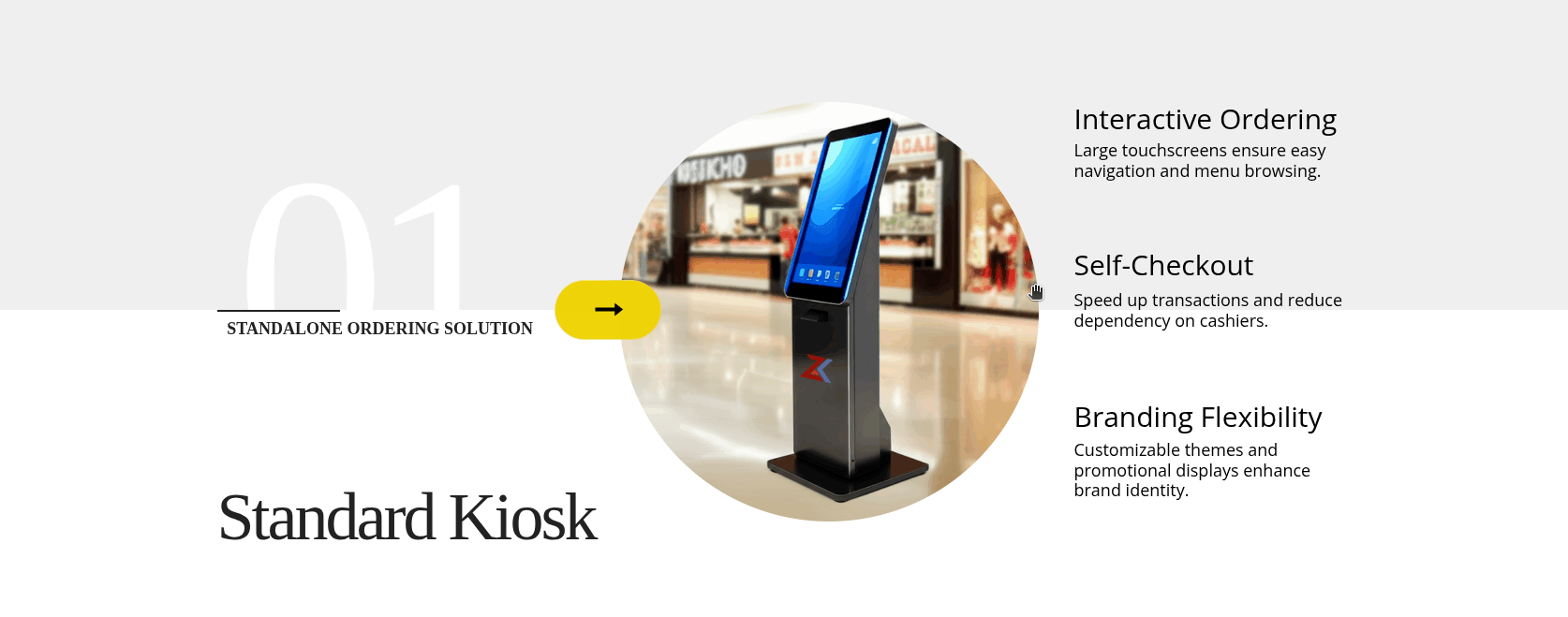
Comprehensive Hardware Options: From compact countertop models suitable for small cafes to robust floor-standing units for high-traffic food courts, ZenKiosk offers hardware configurations for every environment. All hardware is built to withstand intensive use in demanding restaurant conditions.
Intelligent Software Platform: The ZenKiosk software combines user-friendly customer interfaces with powerful backend management tools. Restaurant operators can manage menus, monitor real-time sales, analyze customer patterns, and control multiple locations through cloud-based dashboards.
Seamless Integration Capabilities: ZenKiosk integrates effortlessly with popular POS systems, kitchen display screens, inventory management platforms, and accounting software, ensuring unified operations across all restaurant systems. Book you Demo for Top Self-Ordering Kiosk Software System Provider in Bangalore
Proven Upselling Features: Built-in recommendation engines drive increased average order values through strategic product suggestions, combo offers, and add-on prompts that appear at optimal moments in the customer journey.
Flexible Pricing Models: Understanding that different businesses have different financial capabilities, ZenKiosk offers flexible acquisition options including outright purchase, lease arrangements, and “Kiosk-as-a-Service” models with minimal upfront investment.
Local Support Network: With dedicated support teams in Bangalore and across India, ZenKiosk ensures rapid response to any technical issues, minimizing downtime and maintaining consistent operations.
Continuous Innovation: The ZenKiosk team continuously develops new features and improvements based on customer feedback and emerging industry trends, ensuring clients always have access to cutting-edge capabilities.
ZenKiosk in Action
Restaurants across Bangalore implementing ZenKiosk have reported significant operational improvements. Quick-service chains experience reduced queue lengths during lunch and dinner rushes, enabling them to serve more customers without compromising service quality. Independent restaurants appreciate the professional digital presence that ZenKiosk provides, enhancing their brand perception among tech-savvy customers.
Food court operators particularly benefit from ZenKiosk’s multi-vendor capabilities, allowing different food stalls to share kiosk infrastructure while maintaining separate menu management and reporting. This shared approach reduces individual investment requirements while providing customers with convenient centralized ordering.
The analytics capabilities have proven particularly valuable, with restaurant owners gaining unprecedented insights into customer preferences, enabling menu optimization that drives both customer satisfaction and profitability.
The adoption of self-ordering kiosk systems represents more than a technological upgrade; it signifies a fundamental transformation in how restaurants operate and engage with customers. For Bangalore’s dynamic restaurant industry, these systems offer solutions to pressing challenges while creating opportunities for growth and enhanced customer experiences.
As customer expectations continue evolving toward digital-first interactions, and as operational pressures intensify, self-ordering kiosks transition from competitive advantages to operational necessities. The technology delivers measurable benefits across multiple dimensions: increased revenue through higher average order values, reduced operational costs through labor optimization, improved customer satisfaction through enhanced experiences, and valuable data insights that inform strategic decisions. Book you Demo for Top Self-Ordering Kiosk Software System Provider in Bangalore
Among the various solutions available in the market, ZenKiosk stands out as a comprehensive platform specifically designed for Indian restaurant operations. By combining robust hardware, intelligent software, seamless integrations, and dedicated local support, ZenKiosk empowers restaurants to confidently embrace digital transformation and thrive in an increasingly competitive landscape.
For restaurants in Bangalore looking to remain competitive, enhance operational efficiency, and deliver exceptional customer experiences, investing in a quality self-ordering kiosk system like ZenKiosk is not just a wise decision—it’s an essential step toward future success in the evolving hospitality landscape. We Also Provide Best POS Machines and Billing Systems for Businesses